Draft:Suresh Kumar: Difference between revisions
Tag: Undo |
No edit summary |
||
| Line 10: | Line 10: | ||
| title = Suresh Kumar [[file:verified.png]] | | title = Suresh Kumar [[file:verified.png]] | ||
| image = Suresh Kumar Nangia.jpeg | | image = Suresh Kumar Nangia.jpeg | ||
| | | caption = | ||
| birth_date = {{birth date and age|1956|04|04}} | |||
| birth_place = Sonepat, Haryana, India | | birth_place = Sonepat, Haryana, India | ||
| nationality = Indian | | nationality = Indian | ||
| residence = House No. 618, Sector 16, Chandigarh, India | | residence = House No. 618, Sector 16, Chandigarh, India | ||
| occupation = IAS officer (Retd.) | |||
| known_for = Former Chief Principal Secretary to the Chief Minister of Punjab | |||
| years_active = 1977–present | |||
| spouse = Dr. Anita Nangia | |||
| children = 2 | |||
| email = sureshkumarnangia@gmail.com | | email = sureshkumarnangia@gmail.com | ||
}} | }} | ||
Suresh Kumar is | Suresh Kumar (born 4 April 1956) is a retired Indian Administrative Service (IAS) officer and former Chief Principal Secretary to the Chief Minister of Punjab. Over a public service career spanning more than four decades, he has held senior administrative, policy, and development positions in the Government of Punjab, Government of India, and the United Nations system. His work covers governance reforms, economic administration, public finance, rural development, water and power sector management, cooperative restructuring, and large-scale programme design with the World Bank and UN agencies. | ||
Even after retirement, Kumar continues to contribute to public policy as a researcher, advisor, writer and commentator on governance, sustainability, federalism, agriculture, and institutional reform. | |||
==Early life and education== | ==Early life and education== | ||
Kumar was born in Sonepat, Haryana. He completed a Bachelor of Commerce (1973–1976) and a Master of Commerce (1976–1978) from the University of Delhi. | |||
In 1994–95, he earned a Master’s degree in Social Policy and Planning from the London School of Economics, specialising in education and rural development. His academic training informed his later work in social sector policy, governance design, and development planning. | |||
==Civil service career== | ==Civil service career== | ||
===Government of Punjab=== | |||
Kumar joined the Indian Administrative Service (IAS) in 1983 and served in numerous senior roles, including: | |||
* Chief Principal Secretary to the Chief Minister (2017–2021) | |||
* Financial Commissioner Development and Principal Secretary, Water Supply & Sanitation (2013–2016) | |||
* Principal Secretary, Water Supply & Sanitation; Science, Technology & Environment (2012–2013) | |||
* Principal Secretary, Local Government (2012) | |||
* Financial Commissioner, Cooperation; Principal Secretary, Technical Education & Industrial Training; Chairman, Punjab State Board of Technical Education (2010–2012) | |||
* Principal Secretary / Secretary, Irrigation & Power (2007–2009) | |||
* Principal Secretary to the Chief Minister (2003–2007) | |||
* Chief Administrator, Punjab Urban Planning & Development Authority (2003) | |||
* Excise & Taxation Commissioner (2002–2003) | |||
* Registrar, Cooperative Societies (1999–2002) | |||
* Director, Technical Education & Industrial Training (1992–1993) | |||
* Deputy Commissioner, Ferozepur (1990–1992) | |||
* Additional Deputy Commissioner, Amritsar (1987–1989) | |||
* SDO (Civil), Talwandi Sabo (1985–1987) | |||
===Government of India=== | |||
* Deputy Secretary (Training), DoPT (1993–1994) | |||
* Private Secretary to the Minister of State for Education (1995–1996) | |||
* Deputy Secretary, Elementary Education, MHRD (1996–1997) | |||
===United Nations=== | |||
* Consultant and National Programme Manager, UN System Community-Based Primary Education Programme (1997–1999) | |||
* | |||
==Professional Focus== | |||
Kumar’s areas of expertise include: | |||
* Governance reforms and public administration | |||
* Rural development, agriculture policy, and cooperative restructuring | |||
* Water and power sector governance | |||
* Business process re-engineering | |||
* Programme design with the World Bank and UN systems | |||
* High-level governance coordination and public policy formulation | |||
==Professional | |||
* | |||
* | |||
* Programme design | |||
* High-level governance coordination | |||
==Major initiatives and achievements== | |||
Kumar has been associated with several significant policy reforms and development projects, including: | |||
===Policy and governance reforms=== | |||
* Punjab Anti-Red Tape Act 2021 | * Punjab Anti-Red Tape Act 2021 | ||
* Punjab Social Security Fund Act 2019 | * Punjab Social Security Fund Act 2019 | ||
* Punjab Slum Dwellers (Proprietary Rights) Act 2020 | * Punjab Slum Dwellers (Proprietary Rights) Act 2020 | ||
* Punjab Municipal Property (Management and Transfer) Act 2020 | * Punjab Municipal Property (Management and Transfer) Act 2020 | ||
* Mahatma Gandhi Sarbat Vikas Yojna 2018 | * Mahatma Gandhi Sarbat Vikas Yojna (2018) | ||
* VAT implementation in Punjab (2005) | |||
* Punjab | * Cooperative reforms (1999–2002) | ||
* Punjab BPR Report (2008) | |||
* | |||
* Punjab | |||
* Punjab State Water Policy (2007–08) | * Punjab State Water Policy (2007–08) | ||
* Power Sector Reforms Roadmap (2010) | * Power Sector Reforms Roadmap (2010) | ||
* | |||
* | ===Water, rural development, and infrastructure=== | ||
* | * Punjab Rural Drinking Water Supply & Sanitation Projects – World Bank | ||
○ US$154M (Phase I) | |||
○ US$354M (Phase II) | |||
* Punjab Rural Water Supply Policy (2014) | |||
* Water resource development projects worth ₹7352 crore | |||
===Energy sector=== | |||
Oversaw the establishment of three major private-sector power plants: | |||
* Talwandi Sabo – 1980 MW | |||
* Rajpura – 1320 MW | |||
* Goindwal Sahib – 540 MW | |||
* Total private investment: over ₹20,000 crore | |||
* Conceptualization of Energy Sector Reforms in Punjab | |||
===Agriculture and education initiatives=== | |||
* State Agriculture Diversification Plan (₹8775 crore) | |||
* Technical Education & ITI Upgradation (World Bank supported) | |||
* Technician Education Development Programme (1992–93) | |||
* Punjab Technical Education Board Act (1993) | |||
* Operation Blackboard implementation (1995–96) | |||
* Mid-Day Meal Scheme expansion for 110 million children (1995–96) | |||
* RTE Fundamental Right Report (1997) | |||
* Inter-State Teacher Exchange Programme (1997–99) | * Inter-State Teacher Exchange Programme (1997–99) | ||
* SDG Academy: Global Water Crisis | ==Education, training, and international exposure== | ||
* IMF: Debt Sustainability Framework | Kumar has received extensive training from institutions, including: | ||
* World Bank OLC: Digital Agriculture | * SDG Academy (2024): Global Water Crisis, Ethics in Action | ||
* University of Edinburgh: Sustainable Global Food Systems | * IMF (2022): Debt Sustainability Framework | ||
* | * World Bank OLC (2022): Smart Cities, Digital Agriculture, Quality Infrastructure | ||
* University of Edinburgh (2022): Sustainable Global Food Systems | |||
* LBSNAA Mid-Career Phase V | * UC Berkeley (2019): Writing for Social Justice | ||
* Columbia University | * LBSNAA (2011): Mid-Career Phase V | ||
* IIM Bangalore | * Columbia University (2011): Governance Programme | ||
* IIM Bangalore (2011), IIM Ahmedabad (1989) | |||
* | * TERI (1994) | ||
* | * Multiple international workshops in Nepal, Thailand, Mexico, China, UK, USA, and Austria (1994–2012) | ||
==Honours, awards and memberships== | ==Honours, awards, and memberships== | ||
* Advisor, Global Policy Insights (2022–present) | * Advisor, Global Policy Insights (2022–present) | ||
* Independent Director, Vardhman Textiles Ltd (from 2022) | * Independent Director, Vardhman Textiles Ltd (from 2022) | ||
* Independent Director, | * Independent Director, UPL Ltd (from 2022) | ||
* International Policy Fellow, CSaP Cambridge (2019–2023) | * International Policy Fellow, Centre for Science and Policy (CSaP), Cambridge (2019–2023) | ||
* TIGR2ESS Project | * TIGR2ESS Project, University of Cambridge (2020–2022) | ||
* Member-Convener, Inter-UN Working Group | * Member-Convener, Inter-UN Working Group (Primary Education) | ||
* Member, UN Gender Database Group | * Member, UN Gender Database Group | ||
* UK ODA Scholarship – LSE | * UK ODA Scholarship – LSE | ||
* | * Delhi University M.Com merit certificate (4th rank, 1978) | ||
* Second rank in B.Com (1976) | |||
* National scholarship and merit certificate | |||
* | |||
== | ==Languages and computing skills== | ||
* English, Hindi, Punjabi | * English, Hindi, Punjabi | ||
* Skilled in word processing, | * Skilled in word processing, spreadsheets, and databases | ||
== | ==Personal life== | ||
Kumar lives in Chandigarh with his family. His interests include reading, writing, cricket, and badminton. He remains actively involved in advisory work, academic lectures, and governance research. | |||
==Gallery== | ==Gallery== | ||
| Line 163: | Line 146: | ||
</gallery> | </gallery> | ||
==Public Policy | ==Publications and references== | ||
===Governance & Public Policy=== | |||
* [https://www.hindustantimes.com/cities/chandigarh-news/guest-colnumn-democracy-prevails-despite-political-fluctuations-10717579911329 Democracy prevails despite political fluctuations – Hindustan Times] | * [https://www.hindustantimes.com/cities/chandigarh-news/guest-colnumn-democracy-prevails-despite-political-fluctuations-10717579911329 Democracy prevails despite political fluctuations – Hindustan Times] | ||
* [https://www.hindustantimes.com/cities/chandigarh-news/guest-column-our-country-needs-more-participatory-governance-101710616982205.html?utm_source=whatsapp&utm_medium=social&utm_campaign=ht_site Our country needs more participatory governance – Hindustan Times] | * [https://www.hindustantimes.com/cities/chandigarh-news/guest-column-our-country-needs-more-participatory-governance-101710616982205.html?utm_source=whatsapp&utm_medium=social&utm_campaign=ht_site Our country needs more participatory governance – Hindustan Times] | ||
* [https://government.economictimes.indiatimes.com/blog/governance-paradigm-shift-majoritarian-authoritarianism-vs-participatory-democracy/108669284?utm_source=copy&utm_medium=pshare Governance paradigm shift: Majoritarian authoritarianism vs participatory democracy – ET Government] | * [https://government.economictimes.indiatimes.com/blog/governance-paradigm-shift-majoritarian-authoritarianism-vs-participatory-democracy/108669284?utm_source=copy&utm_medium=pshare Governance paradigm shift: Majoritarian authoritarianism vs participatory democracy – ET Government] | ||
* [https://epaper.hindustantimes.com/Home/ShareArticle?OrgId=9327ca8439 Changing governance paradigms – Hindustan Times epaper] | * [https://epaper.hindustantimes.com/Home/ShareArticle?OrgId=9327ca8439 Changing governance paradigms – Hindustan Times epaper] | ||
* [https://epaper.hindustantimes.com/Home/ShareArticle?OrgId=21ee2bc9e1 Financial centralisation threat to federal structure – Hindustan Times epaper] | * [https://epaper.hindustantimes.com/Home/ShareArticle?OrgId=21ee2bc9e1 Financial centralisation threat to federal structure – Hindustan Times epaper] | ||
* [https://government.economictimes.indiatimes.com/blog/good-governance-is-more-essential-than-economic-growth-to-sustain-democracy/105921900 Good governance more essential than economic growth – ET Government] | * [https://government.economictimes.indiatimes.com/blog/good-governance-is-more-essential-than-economic-growth-to-sustain-democracy/105921900 Good governance more essential than economic growth – ET Government] | ||
* [https://www.hindustantimes.com/cities/chandigarh-news/guest-column-leveraging-bureaucracy-for-effective-public-service-delivery-101654033025984.html Leveraging bureaucracy for effective public service delivery – Hindustan Times] | * [https://www.hindustantimes.com/cities/chandigarh-news/guest-column-leveraging-bureaucracy-for-effective-public-service-delivery-101654033025984.html Leveraging bureaucracy for effective public service delivery – Hindustan Times] | ||
* [https://www.hindustantimes.com/cities/chandigarh-news/guest-column-pandemic-unveils-the-politics-of-expertise-101654978069593.html Pandemic unveils the politics of expertise – Hindustan Times] | * [https://www.hindustantimes.com/cities/chandigarh-news/guest-column-pandemic-unveils-the-politics-of-expertise-101654978069593.html Pandemic unveils the politics of expertise – Hindustan Times] | ||
* [https://www.millenniumpost.in/amp/opinion/politics-of-policymaking-523431 Politics of policymaking – Millennium Post] | * [https://www.millenniumpost.in/amp/opinion/politics-of-policymaking-523431 Politics of policymaking – Millennium Post] | ||
* [https://epaper.hindustantimes.com/Home/ShareArticle?OrgId=2955f5b685b Transition to evidence-based policies – Hindustan Times epaper] | * [https://epaper.hindustantimes.com/Home/ShareArticle?OrgId=2955f5b685b Transition to evidence-based policies – Hindustan Times epaper] | ||
* [https://epaper.hindustantimes.com/Home/ShareArticle?OrgId=2585f35311c Punjab issues need attention – Hindustan Times epaper] | |||
* [https://m.tribuneindia.com/news/musings/is-change-in-punjab-for-real-399595 Is change in Punjab for real? – Tribune] | |||
* [https://www.hindustantimes.com/cities/chandigarh-news/guest-column-it-s-time-to-reboot-india-s-broken-policy-machine-101652559451018 It’s time to reboot India’s broken policy machine – Hindustan Times] | |||
* [https://www.hindustantimes.com/cities/chandigarh-news/guest-column-opinions-differ-but-differences-matter-101706002405481.html?utm_source=whatsapp&utm_medium=social&utm_campaign=ht_AMP Opinions differ, but differences matter – Hindustan Times] | |||
* [https://government.economictimes.indiatimes.com/news/governance/opinion-cooperatives-present-a-democratic-business-model/84782822 Cooperatives present a democratic business model – ET Government] | |||
* [https://www.millenniumpost.in/opinion/thriving-in-harmony-542928 Thriving in harmony – Millennium Post] | * [https://www.millenniumpost.in/opinion/thriving-in-harmony-542928 Thriving in harmony – Millennium Post] | ||
* [https://epaper.hindustantimes.com/Home/ShareArticle?OrgId=379b772fa5 Stubble trouble Part-II – Hindustan Times epaper] | * [https://epaper.hindustantimes.com/Home/ShareArticle?OrgId=379b772fa5 Stubble trouble Part-II – Hindustan Times epaper] | ||
* [https://epaper.hindustantimes.com/Home/ShareArticle?OrgId=109ed510489 Repeal of farm laws reflects fading institutional memory – Hindustan Times epaper] | * [https://epaper.hindustantimes.com/Home/ShareArticle?OrgId=109ed510489 Repeal of farm laws reflects fading institutional memory – Hindustan Times epaper] | ||
* [https://epaper.hindustantimes.com/Home/ShareArticle?OrgId=1477f5d10da Fiscal management & public debt – Hindustan Times epaper] | * [https://epaper.hindustantimes.com/Home/ShareArticle?OrgId=1477f5d10da Fiscal management & public debt – Hindustan Times epaper] | ||
* [https://epaper.hindustantimes.com/Home/ShareArticle?OrgId=261049ace992&imageview=0 Changing imperatives of governance – Hindustan Times epaper] | * [https://epaper.hindustantimes.com/Home/ShareArticle?OrgId=261049ace992&imageview=0 Changing imperatives of governance – Hindustan Times epaper] | ||
==Sustainability & Governance References== | ==Sustainability & Governance References== | ||
Revision as of 07:08, 10 December 2025
Suresh Kumar (born 4 April 1956) is a retired Indian Administrative Service (IAS) officer and former Chief Principal Secretary to the Chief Minister of Punjab. Over a public service career spanning more than four decades, he has held senior administrative, policy, and development positions in the Government of Punjab, Government of India, and the United Nations system. His work covers governance reforms, economic administration, public finance, rural development, water and power sector management, cooperative restructuring, and large-scale programme design with the World Bank and UN agencies.
Even after retirement, Kumar continues to contribute to public policy as a researcher, advisor, writer and commentator on governance, sustainability, federalism, agriculture, and institutional reform.
Early life and education
Kumar was born in Sonepat, Haryana. He completed a Bachelor of Commerce (1973–1976) and a Master of Commerce (1976–1978) from the University of Delhi.
In 1994–95, he earned a Master’s degree in Social Policy and Planning from the London School of Economics, specialising in education and rural development. His academic training informed his later work in social sector policy, governance design, and development planning.
Civil service career
Government of Punjab
Kumar joined the Indian Administrative Service (IAS) in 1983 and served in numerous senior roles, including:
- Chief Principal Secretary to the Chief Minister (2017–2021)
- Financial Commissioner Development and Principal Secretary, Water Supply & Sanitation (2013–2016)
- Principal Secretary, Water Supply & Sanitation; Science, Technology & Environment (2012–2013)
- Principal Secretary, Local Government (2012)
- Financial Commissioner, Cooperation; Principal Secretary, Technical Education & Industrial Training; Chairman, Punjab State Board of Technical Education (2010–2012)
- Principal Secretary / Secretary, Irrigation & Power (2007–2009)
- Principal Secretary to the Chief Minister (2003–2007)
- Chief Administrator, Punjab Urban Planning & Development Authority (2003)
- Excise & Taxation Commissioner (2002–2003)
- Registrar, Cooperative Societies (1999–2002)
- Director, Technical Education & Industrial Training (1992–1993)
- Deputy Commissioner, Ferozepur (1990–1992)
- Additional Deputy Commissioner, Amritsar (1987–1989)
- SDO (Civil), Talwandi Sabo (1985–1987)
Government of India
- Deputy Secretary (Training), DoPT (1993–1994)
- Private Secretary to the Minister of State for Education (1995–1996)
- Deputy Secretary, Elementary Education, MHRD (1996–1997)
United Nations
- Consultant and National Programme Manager, UN System Community-Based Primary Education Programme (1997–1999)
Professional Focus
Kumar’s areas of expertise include:
- Governance reforms and public administration
- Rural development, agriculture policy, and cooperative restructuring
- Water and power sector governance
- Business process re-engineering
- Programme design with the World Bank and UN systems
- High-level governance coordination and public policy formulation
Major initiatives and achievements
Kumar has been associated with several significant policy reforms and development projects, including:
Policy and governance reforms
- Punjab Anti-Red Tape Act 2021
- Punjab Social Security Fund Act 2019
- Punjab Slum Dwellers (Proprietary Rights) Act 2020
- Punjab Municipal Property (Management and Transfer) Act 2020
- Mahatma Gandhi Sarbat Vikas Yojna (2018)
- VAT implementation in Punjab (2005)
- Cooperative reforms (1999–2002)
- Punjab BPR Report (2008)
- Punjab State Water Policy (2007–08)
- Power Sector Reforms Roadmap (2010)
Water, rural development, and infrastructure
- Punjab Rural Drinking Water Supply & Sanitation Projects – World Bank
○ US$154M (Phase I) ○ US$354M (Phase II)
- Punjab Rural Water Supply Policy (2014)
- Water resource development projects worth ₹7352 crore
Energy sector
Oversaw the establishment of three major private-sector power plants:
- Talwandi Sabo – 1980 MW
- Rajpura – 1320 MW
- Goindwal Sahib – 540 MW
- Total private investment: over ₹20,000 crore
- Conceptualization of Energy Sector Reforms in Punjab
Agriculture and education initiatives
- State Agriculture Diversification Plan (₹8775 crore)
- Technical Education & ITI Upgradation (World Bank supported)
- Technician Education Development Programme (1992–93)
- Punjab Technical Education Board Act (1993)
- Operation Blackboard implementation (1995–96)
- Mid-Day Meal Scheme expansion for 110 million children (1995–96)
- RTE Fundamental Right Report (1997)
- Inter-State Teacher Exchange Programme (1997–99)
Education, training, and international exposure
Kumar has received extensive training from institutions, including:
- SDG Academy (2024): Global Water Crisis, Ethics in Action
- IMF (2022): Debt Sustainability Framework
- World Bank OLC (2022): Smart Cities, Digital Agriculture, Quality Infrastructure
- University of Edinburgh (2022): Sustainable Global Food Systems
- UC Berkeley (2019): Writing for Social Justice
- LBSNAA (2011): Mid-Career Phase V
- Columbia University (2011): Governance Programme
- IIM Bangalore (2011), IIM Ahmedabad (1989)
- TERI (1994)
- Multiple international workshops in Nepal, Thailand, Mexico, China, UK, USA, and Austria (1994–2012)
Honours, awards, and memberships
- Advisor, Global Policy Insights (2022–present)
- Independent Director, Vardhman Textiles Ltd (from 2022)
- Independent Director, UPL Ltd (from 2022)
- International Policy Fellow, Centre for Science and Policy (CSaP), Cambridge (2019–2023)
- TIGR2ESS Project, University of Cambridge (2020–2022)
- Member-Convener, Inter-UN Working Group (Primary Education)
- Member, UN Gender Database Group
- UK ODA Scholarship – LSE
- Delhi University M.Com merit certificate (4th rank, 1978)
- Second rank in B.Com (1976)
- National scholarship and merit certificate
Languages and computing skills
- English, Hindi, Punjabi
- Skilled in word processing, spreadsheets, and databases
Personal life
Kumar lives in Chandigarh with his family. His interests include reading, writing, cricket, and badminton. He remains actively involved in advisory work, academic lectures, and governance research.
Gallery
-
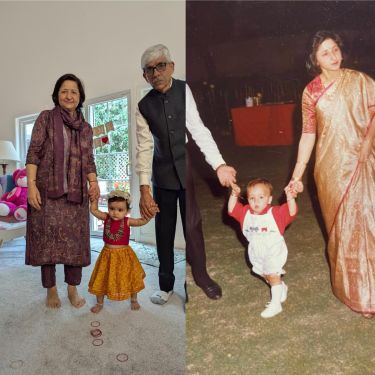 Suresh Kumar, and his wife Dr Anita Nangia with elder son Vaibhav and his daughter Roohi
 -
 Suresh Kumar, with wife Dr Anita Nangia and younger son Anish Nangia and his wife Shilpa.
 -
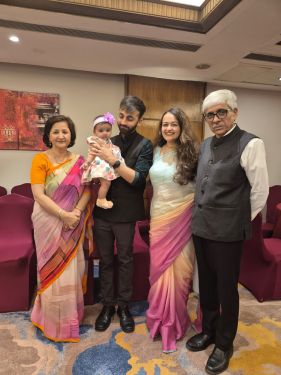 Suresh Kumar and his wife Dr Anita Nangia with their elder son Vaibhav Nangia and his wife Anumeha with their daughter Roohi
 -
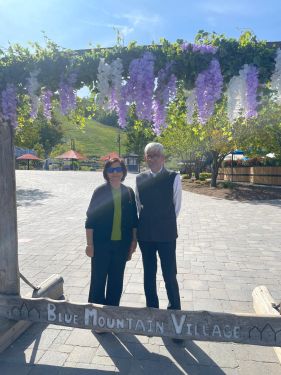 Suresh Kumar and his wife Dr Anita Nangia


Publications and references
Governance & Public Policy
- Democracy prevails despite political fluctuations – Hindustan Times
- Our country needs more participatory governance – Hindustan Times
- Governance paradigm shift: Majoritarian authoritarianism vs participatory democracy – ET Government
- Changing governance paradigms – Hindustan Times epaper
- Financial centralisation threat to federal structure – Hindustan Times epaper
- Good governance more essential than economic growth – ET Government
- Leveraging bureaucracy for effective public service delivery – Hindustan Times
- Pandemic unveils the politics of expertise – Hindustan Times
- Politics of policymaking – Millennium Post
- Transition to evidence-based policies – Hindustan Times epaper
- Punjab issues need attention – Hindustan Times epaper
- Is change in Punjab for real? – Tribune
- It’s time to reboot India’s broken policy machine – Hindustan Times
- Opinions differ, but differences matter – Hindustan Times
- Cooperatives present a democratic business model – ET Government
- Thriving in harmony – Millennium Post
- Stubble trouble Part-II – Hindustan Times epaper
- Repeal of farm laws reflects fading institutional memory – Hindustan Times epaper
- Fiscal management & public debt – Hindustan Times epaper
- Changing imperatives of governance – Hindustan Times epaper
Sustainability & Governance References
- Towards sustainable governance – ET Government
- Towards sustainable governance, embracing change for collective welfare – Hindustan Times
- Water Governance: Unlocking Sustainable Development in Punjab – Hindustan Times (Linked reference)
- Water Governance: Unlocking Sustainable Development in Punjab – ET Government
- Punjab's water woes: Beneficiary states should share burden – HT epaper
- Sustainable development needs comprehensive roadmap – HT epaper
- Perceived limitations of MDGs forced SDGs – ET Government
- Balancing heritage with sustainable development – ET Government
- Stubble trouble: Are farmers solely to blame? – ET Government
- Sutlej river basin needs integrated management – HT epaper
- Buddha Nallah: A toxic story of industrialisation – Tribune
- Leveraging history in policymaking – ET Government
- Disconnect in farm governance (related to sustainability) – HT epaper
- Stubble trouble Part-II – HT epaper
- AI in governance – ET Government
- Reclaiming integrity through transparent governance – HT epaper
- Media moderation in governance – HT epaper
- The travel spice: An avoidable bitterness – Daily World
Agriculture & Food Systems References
- Diversify MSP to empower farmers – Tribune
- What ails Indian agriculture? – Daily World (Linked reference)
- Need to enhance resilience of farmers – Daily World epaper
- Farmers hit the road again, govt at crossroads – HT epaper
- Agricultural transformation demands intensive care – ET Government
- Disconnect in agricultural governance: bridging the gap – ET Government
- Punjab’s agriculture policy needs to be more nuanced – Hindustan Times
- Withering cotton cultivation in Punjab – HT epaper
- Add value to agriculture for its transformation – Hindustan Times
- Sri Lankan economy collapsed due to flawed agriculture policy – ET Government
- Why diversification hasn't enthused farmers – Daily World epaper PDF
- Farm legislations fail to enthuse farmers – ET Government
- In the end, right remains right – Tribune epaper
- Disconnect in farm governance – HT epaper
- Address inherent flaws & disparities in NEET – Hindustan Times
Budget & Finances References
- Aligning fund devolution with changing growth imperatives – Hindustan Times
- Navigating the future of finance in Punjab – HT epaper
- Corporate governance in PSEs: BRSR fundamentals – ET Government
- How private is private investment? – ET Government
- Thriving in harmony – Millennium Post
- Withering cotton cultivation in Punjab (linked to economic context) – HT epaper
- AI in governance: strategic investments & collaboration – ET Government
- Indus Water Treaty sustains fragile hope of peace – Hindustan Times (Linked reference)